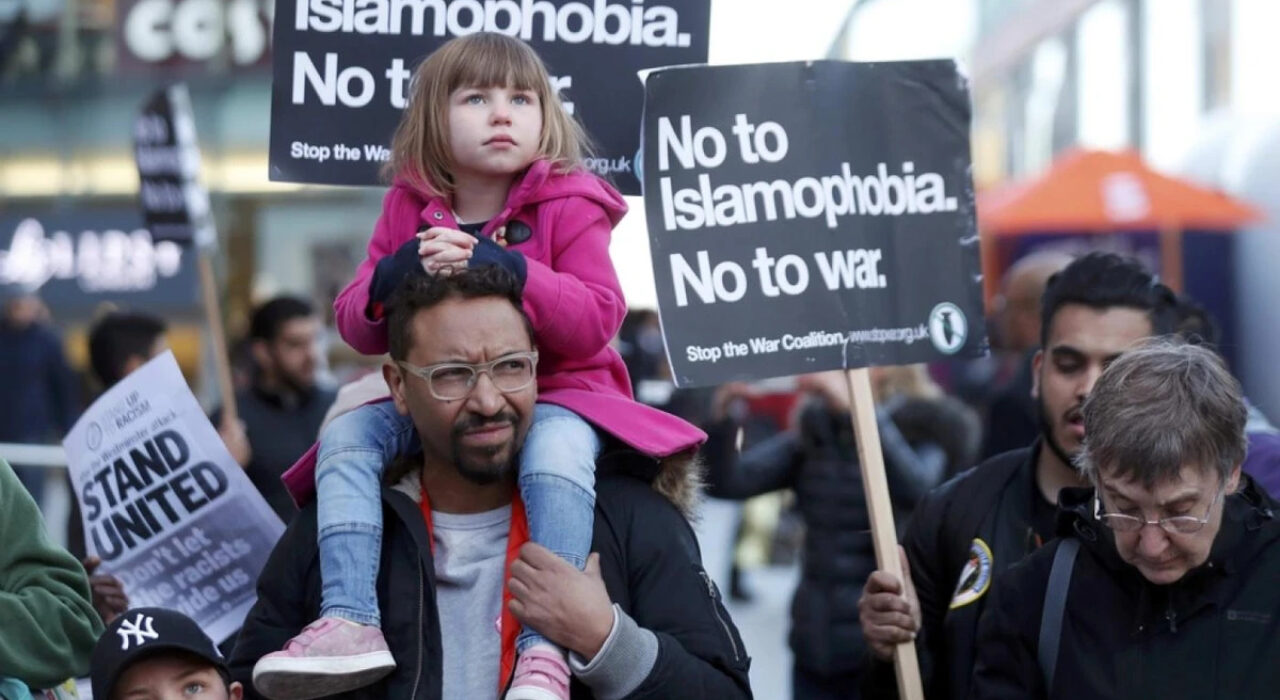
Anti-Muslim hate crimes have recorded the sharpest increase among religiously targeted offences, rising by 15% in the year to March 2026, as warnings grow over increasingly severe attacks on mosques.
Islamophobic offences in the UK have reached record levels, according to newly released Home Office figures, while the British Muslim Trust (BMT) has warned of an alarming escalation in anti-Muslim hostility.
The data shows that 146,825 hate crimes were recorded in England and Wales in the year ending March 2026, representing a 7% increase compared with the previous year. Offences targeting Muslims experienced the largest rise, climbing from 4,479 to 5,132, an increase of 15%.
The figures exclude data from the Metropolitan Police in London following changes to the force’s crime-recording procedures.
The Home Office recorded a significant increase in Islamophobic offences in September 2025, coinciding with protests and public disorder. Another rise was reported following the outbreak of war involving the US, Israel and Iran in March 2026.
The British Muslim Trust, appointed by the government in July 2025 to monitor anti-Muslim hostility, has highlighted a concerning change in the nature of these incidents. According to the organisation, attacks are increasingly moving beyond mosques themselves to target Muslim worshippers and individuals inside religious premises.
In its report, A Year of Division, the BMT documented 78 incidents involving 64 mosques across the UK and Channel Islands between 21 July 2025 and 30 July 2026, averaging approximately one incident every five days.
The report described the past year as a period of unprecedented anti-Muslim hostility and warned that growing prejudice was contributing to increasingly serious attacks against mosques and Muslim communities.
Increasing Severity of Attacks
The BMT uses a seven-level scale to assess the severity of anti-Muslim incidents. Its findings show that, from November 2025 onwards, 62.7% of recorded incidents fell within the four highest severity levels. These included threats and sustained harassment, weapons or threats to kill, arson and physical violence, and alleged plots intended to cause mass casualties.
By comparison, 22.2% of incidents recorded between July and October 2025 fell within these categories, indicating a substantial increase in the proportion of more serious incidents.
The trust also called on politicians and public commentators to exercise greater care when discussing immigration and integration, warning that political rhetoric could fuel hostility towards British Muslim communities when criticism of policy became difficult to distinguish from prejudice against Muslims.
Planned Watford Mosque Faces Repeated Attacks
Concerns about anti-Muslim hostility have also been raised in Watford, where the proposed Masjid Al-Ummah has experienced repeated incidents targeting its premises.
Ammer Amin, a trustee of the mosque, said the current climate had left Muslims feeling increasingly vulnerable and argued that political rhetoric was emboldening those responsible for attacks. He also cautioned against attributing the problem to a single political party, saying similar messages could be heard across different parts of the political spectrum.
The planned mosque aims to provide facilities including a sports hall, gym, nursery and food bank, which would be accessible to the wider local community.
In October 2025, crucifixes were sprayed on the temporary perimeter surrounding the site. A man later admitted possessing a knife and an axe but was cleared of criminal damage. In February 2026, another incident occurred when model pigs were thrown onto the premises.
Calls for Action to Tackle Anti-Muslim Hatred
Akeela Ahmed, chief executive of the British Muslim Trust, warned that the growing frequency and severity of attacks were increasing security pressures on mosques and leaving many Muslims fearful in their everyday lives.
She stressed that efforts must go beyond providing protection for vulnerable religious sites and address the underlying causes of anti-Muslim hatred.
The latest figures have renewed concerns about the safety of Muslim communities across the UK, with calls for stronger action to tackle prejudice, prevent violence and ensure that people can practise their religion without fear of intimidation or attack.

Barden added that the tournament had continued to grow each year, with organisers looking forward to welcoming more participants and visitors to the upcoming event.
The Diwali Cup was first launched in 2024 through a partnership between the Lancashire Cricket Foundation and GIEO Gita UK (Global Inspiration Enlightenment Organisation of the Bhagwad Gita).
The event is funded by GIEO Gita UK and the ECB Cricket Cities Programme. Starting with eight teams in its inaugural year, the tournament expanded to 14 teams in 2025, reflecting its growing popularity and community reach.
As it enters its third year, the Diwali Cup continues to bring people together through cricket, celebrating diversity, cultural heritage and the spirit of Diwali.