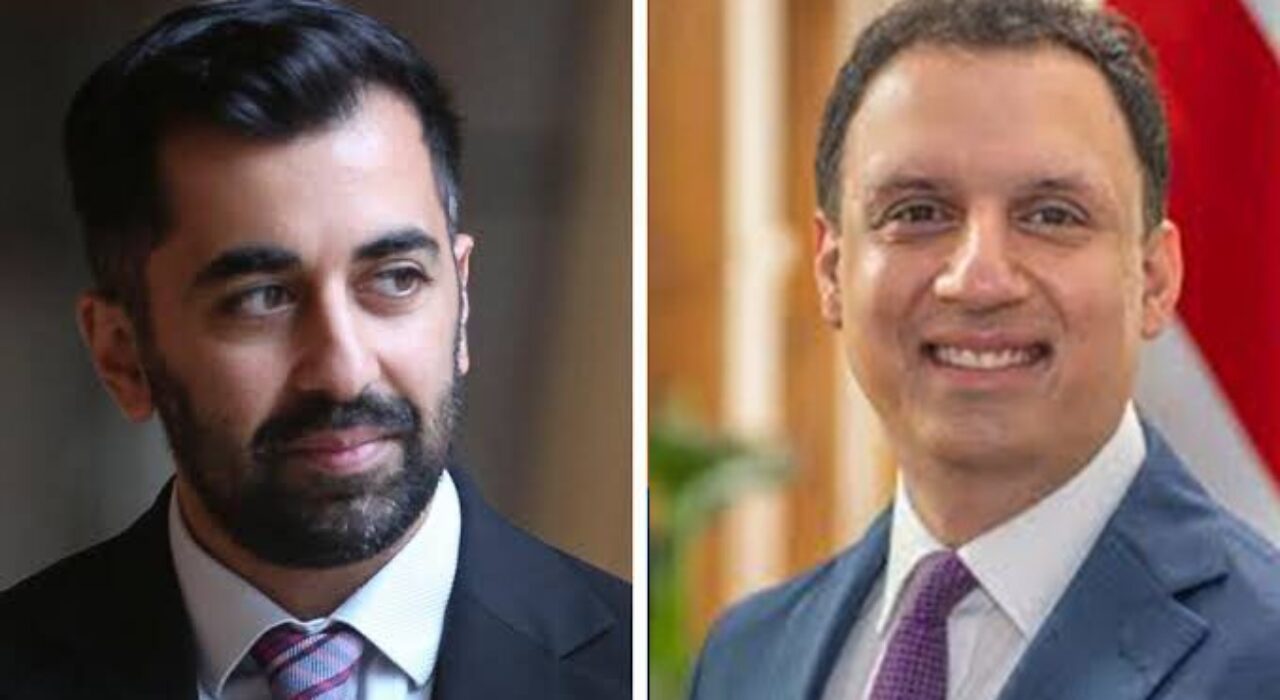
When Anas Sarwar stepped down as Scottish Labour leader in July 2026, and Humza Yousaf had earlier made history as Scotland’s first Scottish Asian and Muslim First Minister, two questions echoed across communities and political circles: were these milestones shaped by the weight of racism, or by gaps in political experience and readiness? For the South Asian diaspora in Scotland and beyond, this is more than political analysis — it is a reckoning with how far representation has come, and how many barriers remain unbroken.
Two Historic Figures, One Shared Journey
Both men share roots in Glasgow’s south side, family origins in Pakistan, and a path that broke centuries of convention. Yousaf became SNP leader and First Minister in 2023; Sarwar led Scottish Labour from 2021 until his surprise resignation this year. But their departures from the highest offices — Yousaf stepping down in 2024, Sarwar moving to a Westminster ministerial post and peerage — have sparked fierce debate: were they pushed out by systemic prejudice, or did they lack the seasoned political footing to sustain leadership?
The Case for Racism: The Unseen Ceiling
For many in the Asian community, the evidence of racialised pressure is undeniable. Both leaders have spoken openly about being the only non-white person in almost every senior meeting they attend. Sarwar faced repeated race-baiting ads edited to twist his words on representation, while Yousaf was targeted globally by bad-faith actors distorting his speeches on equality.
“At every step, the scrutiny is different,” says community activist Farah Mahmood. “A white leader’s mistakes are called ‘teething troubles’; ours are proof we don’t belong.”
Islamophobia and racial stereotyping have been well-documented in Scottish political life, with both men receiving sustained abuse that goes beyond normal political criticism. Allies argue that the relentless, racially coded attacks erode authority faster than policy disagreements ever could — creating an environment where even the most capable leaders find their mandate constantly questioned on grounds unrelated to their performance.
The Case for Experience: The Political Learning Curve
Critics, however, point to tangible challenges that cut across identity. Sarwar’s leadership culminated in Scottish Labour’s defeat at the Scottish elections in 2026, and his move to the Lords drew accusations of abandoning the grassroots after previously pledging never to take an unelected seat. Yousaf’s premiership was marked by internal party fractures, the collapse of the Greens agreement, and a vote of no confidence that forced his exit.
Political analysts note that while both were pioneers in representation, neither had held the long-term, high-executive portfolios that traditionally prepare leaders for office. Yousaf’s stints in justice and health were relatively brief; Sarwar had never held government office before taking the leadership. In a system where familiarity, networks and seasoned judgment matter, some argue they simply did not have the accumulated experience to navigate the institutional complexity of power.
The Intersection: Where Prejudice Meets Preparation
The reality, as always, lies in the overlap. Racism amplifies every gap in experience, and inexperience makes leaders more vulnerable to racialised attack.
When Yousaf faced criticism for policy shifts, it was often framed through stereotypes of “inexperience” or “instability” — language rarely deployed with the same intensity against white predecessors making similar calls. When Sarwar stumbled strategically, opponents seized on his background to suggest he was “out of touch” or “prioritising his own” — despite his lifelong record of public service.
Equally, the structural barriers that limit minority advancement also limit the opportunities to build deep experience. For decades, gatekeepers have sidelined Asian candidates from safe seats and key committees — meaning that when breakthroughs finally happen, the leaders who arrive have had fewer chances to hone their skills in the most senior roles.
What This Means for the Next Generation
For Asian communities across the UK, this is not about choosing between “racism” and “inexperience” — it is about recognising that they feed into one another. If the system denies minority leaders the same training ground, the same patience, and the same fair treatment, every new pioneer will start the race with a heavier burden.
Sarwar’s resignation and Yousaf’s historic term are milestones, not endings. They have proved that representation is possible — but they have also exposed the work still needed: fair access to the ladders of experience, an end to racially coded campaigning, and a culture that judges leaders on their actions, not their heritage.
The Verdict
Neither racism nor lack of experience tells the whole story.
Both Anas Sarwar and Humza Yousaf possessed the vision, intellect and drive to lead — but they operated in a system that still penalises difference while rewarding long-standing access. They were held back not by one flaw, but by the way prejudice twists and magnifies every challenge, while denying them the same space to learn and grow that others take for granted.
Their legacy should not be “did they succeed?” — but rather: will we now build a system where the next generation of Asian leaders can lead without fighting two battles at once?