
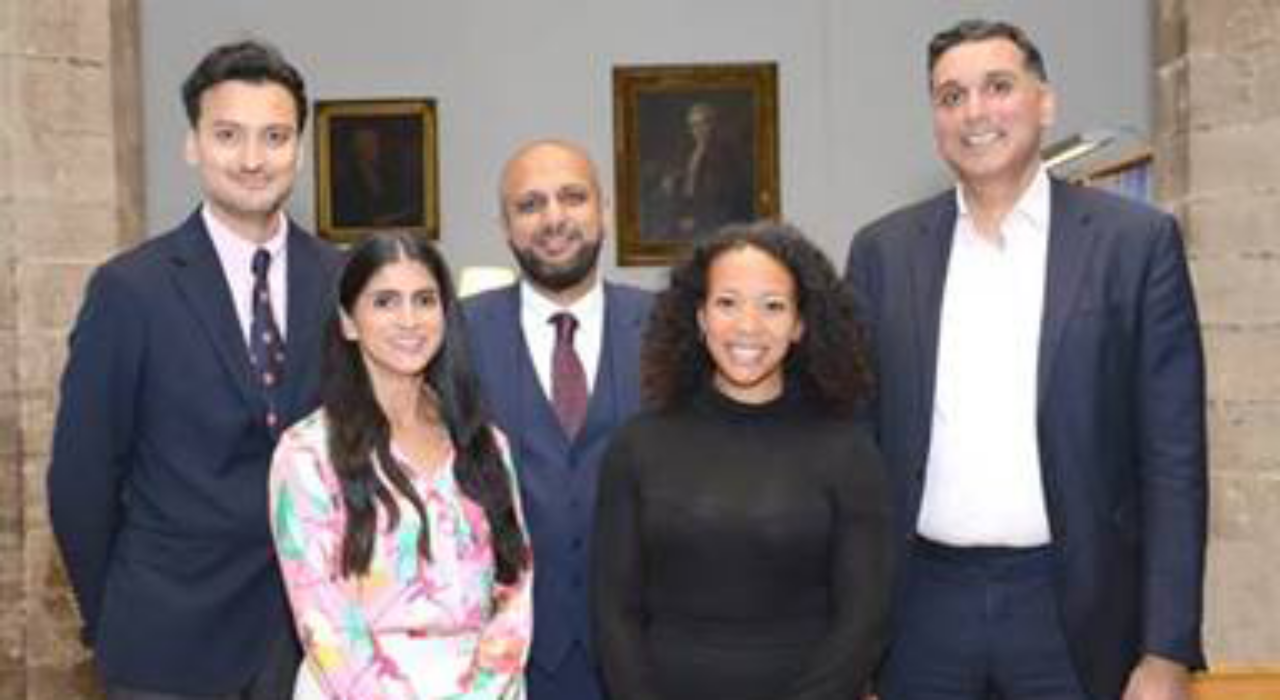
Imran Bashir, centre along with founding members of Semla (Scottish Ethnic Minorities Lawyers Association)
From L-R Usman Tariq, Rupa Mooker. Imran Bashir, Jamila Archibold and Omar Ali
Asian CNCT , September 2026
Edinburgh — In a moment that marks both a historic milestone and a powerful statement about the kind of nation Scotland strives to be, His Majesty The King has, on the recommendation of First Minister John Swinney, appointed Sheriff Principal Aisha Anwar KC as a Senator of the College of Justice, and Imran Bashir as Sheriff of South Strathclyde, Dumfries and Galloway.
These appointments are far more than official changes to the judicial roll: they are a vivid demonstration that inclusion and diversity are not just words in a policy document, but living values taking root at the very heart of public life.
Breaking New Ground for Communities Long Under‑represented
For Scotland’s Muslim, Asian, and broader minority ethnic communities, the news carries profound meaning. For generations, many people from these backgrounds have looked at the highest levels of the legal system — and indeed, across public life — and seen faces that did not reflect their own. Representation was thin, visibility rare.
Now, Sheriff Principal Aisha Anwar KC — a woman, a Muslim, and someone whose heritage reflects the diversity of modern Scotland — steps onto the bench of the College of Justice, the country’s supreme civil and criminal court. Her appointment is historic: it shatters ceilings, proves that talent knows no cultural or religious bounds, and shows that the highest offices are open to those who earn them, regardless of background. As a King’s Counsel and former Sheriff Principal, she brings not only legal brilliance and deep experience, but a perspective shaped by her journey — one that will resonate with anyone who has ever felt they might not “belong” in the room.
At Dumfries, Imran Bashir takes up office as Sheriff, bringing fresh insight and a different lived experience to a regional bench. His appointment sends a clear message: diversity is not reserved for the capital or the highest courts — it belongs everywhere justice is served, from Edinburgh to the Scottish Borders.
Why Inclusion Matters: Justice Must Be Seen to Be Just
Diversity in the judiciary is about much more than symbolism. When people appear before a court, they should feel that the system understands, respects, and reflects the society they live in. A judiciary drawn from only one section of society risks appearing distant, out of touch, or unapproachable.
When communities see people like themselves appointed to positions of authority, trust grows. Young people watching these appointments will see a path forward — one where their faith, heritage, or family background is no barrier to reaching the very top. Inclusion strengthens justice: it brings broader life experience, deeper cultural awareness, and new ways of thinking to complex decisions. It ensures that the law is not just applied fairly, but is seen to be fair by all who come before it.
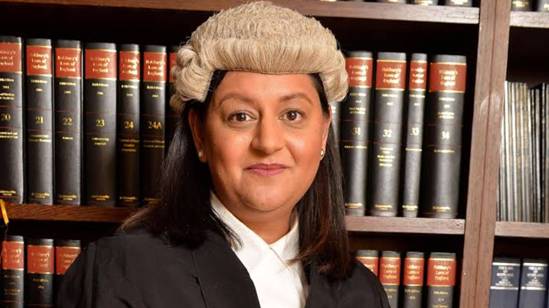
Sheriff Principle Aisha Anwar
A Moment of Pride, and a Step Forward
For Scotland’s Muslim and Asian communities, these appointments are a source of immense pride. They recognise the contribution generations have made — in law, in public service, in every walk of life — and affirm that this contribution is valued, seen, and rewarded. They also challenge stereotypes and show that talent and dedication are what truly matter.
Yet this is not just a victory for one or two communities. It is a victory for all of Scotland. A nation that draws strength from its diversity, that believes talent is distributed equally across every community, and that is committed to building a public service that looks like the people it serves.
First Minister John Swinney’s recommendation, approved by the King, sends a clear signal: Scotland is moving forward. These appointments are a landmark — not the end of the journey, but an important milestone. There is still work to do, but today, the highest court in the land and the sheriff court in Dumfries stand as proof: when we open doors wider, everyone benefits.
A Message for the Future
As Sheriff Principal Aisha Anwar KC and Sheriff Imran Bashir take up their posts, they carry the hopes and expectations of many — but they also carry the authority of their own excellence. They will judge by law, not by background. Yet their presence alone sends a powerful message: inclusion works. Diversity strengthens our institutions. And when we ensure everyone has a fair chance to serve, justice becomes stronger, society becomes richer, and Scotland becomes more truly itself.