
Legal experts warn of constitutional crisis, political persecution, and crimes against humanity
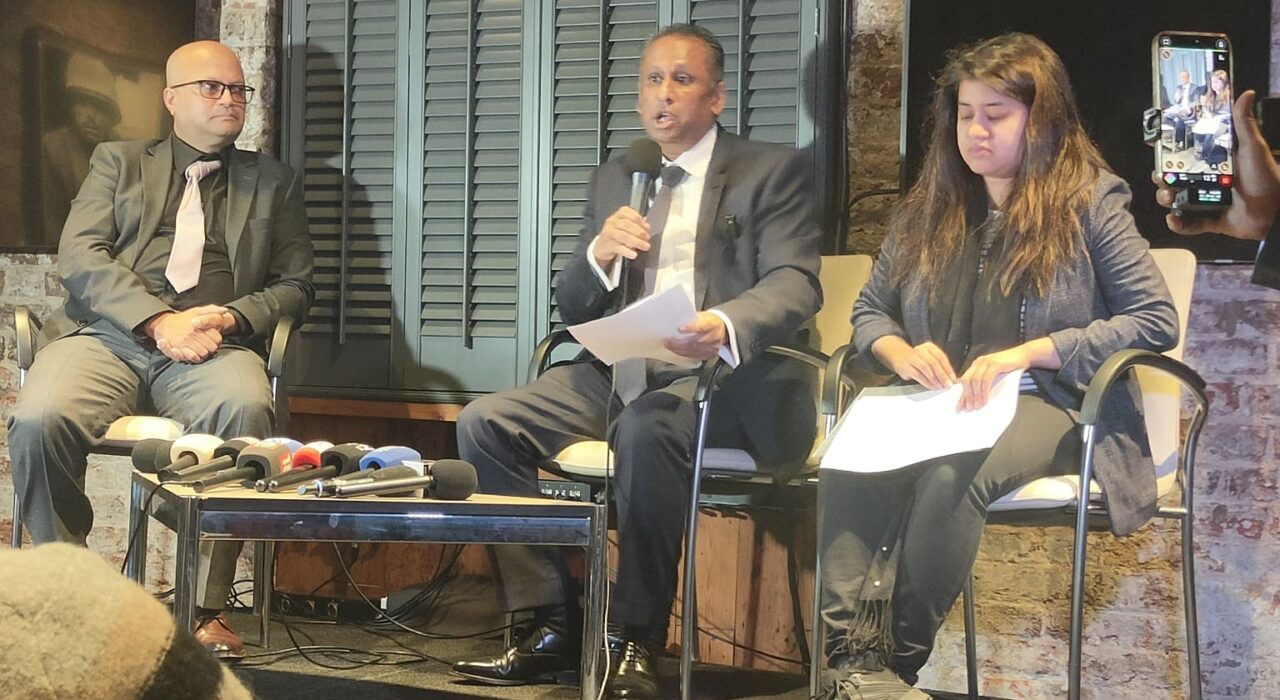
A high-profile press conference held today at the Frontline Club in London exposed what experts described as “one of the most serious constitutional and human rights crises in Bangladesh’s modern history.”
Led by Sayed Zaynal Abedin, Solicitor of the Senior Courts of England and Wales, the briefing brought together journalists, legal analysts, and human rights advocates to discuss the ongoing misuse of the International Crimes Tribunal of Bangladesh (ICT-BD) under the unconstitutional administration of Dr. Muhammad Yunus.
The event revealed detailed legal findings and documentation suggesting that the ICT has been repurposed as a political weapon targeting opposition figures, journalists, and minority communities in violation of Bangladesh’s Constitution, international law, and the principles of natural justice.
Key Points Presented
- Under Article 57 of the Bangladesh Constitution, Sheikh Hasina remains the lawful Prime Minister until a constitutionally valid election is held. Legal experts at the briefing argued that no such election has taken place, rendering the current Yunus regime “unlawful and without constitutional mandate.”
- A 2024 Presidential Ordinance retrospectively extended the ICT Act 1973, which violates the prohibition on retrospective criminal laws and bypasses parliamentary approval.
- Defendants, including the Prime Minister, have reportedly been denied the right to select their own counsel — contravening both the Bangladesh Constitution and the International Covenant on Civil and Political Rights (ICCPR).
- The analysis revealed that over 400,000 individuals — including journalists, minority leaders, and opposition members — have been detained since August 2024.
Reports of torture, deaths in custody, and extrajudicial executions were described as meeting the threshold for crimes against humanity under Article 7 of the Rome Statute.
Sayed Zaynal Abedin said in a statement: “The International Crimes Tribunal, as it currently operates, is not a court of justice it is a political tool of persecution under an unlawful regime.
Bangladesh deserves a judiciary founded on legitimacy, fairness, and the rule of law not a theatre of repression disguised as justice. Until constitutional order is restored, the ICT will remain a Kangaroo Court that criminalises democracy and silences dissent.”
Following the briefing, Mr. Abedin confirmed that legal submissions and evidence bundles are being prepared for international human rights bodies, including the International Criminal Court (ICC) and UN Special Rapporteurs on judicial independence and arbitrary detention.
Journalists in attendance received copies of the Legal Summary Annex and Evidence Dossier, comprising more than 250 international reports and documented abuses since the unlawful transition of power in August 2024.
Powered by
Asian Connect &
Business Connect